

Hotels + Camp

Sightseeing

Meal

Transportation

Tour Highlights
- Sacred darshan of Yamunotri, Gangotri, Kedarnath Temple & Badrinath Temple
- Comfortable premium hotels and deluxe accommodations
- Scenic Himalayan drives through rivers, valleys, and snow-capped mountains
- Spiritual Ganga Aarti experience at Rishikesh and Haridwar
- Visit to Mana Village – the last Indian village near Tibet border
- Optional helicopter services for Kedarnath Yatra
- Professional driver and well-maintained private vehicle
- Ideal package for families, senior citizens, and spiritual travelers
- Opportunity to explore local culture, temples, and Himalayan beauty
- Hassle-free pilgrimage with complete travel assistance throughout the journey
Day 00 : Delhi to Haridwar
Upon arrival at Delhi our representative will greet you and pick you up from Akshardham metro station gate No. 1 (Pick up Timing 11:00 to 11:30 PM) & Later drive to Haridwar. Early morning You will reach haridwar. You can do Ganga snan in haridwar by your own.
Haridwar: Haridwar, located in Uttarakhand, India, is a sacred city steeped in spirituality and culture. It is renowned for Har Ki Pauri, a revered ghat on the banks of the Ganges River, where the enchanting Ganga Aarti draws thousands of devotees daily. Haridwar serves as a gateway to the Char Dham pilgrimage and is home to numerous ancient temples, ashrams, and holy sites. Surrounded by the majestic Himalayas, it offers a serene atmosphere for spiritual seekers and nature enthusiasts alike.
Distance from Delhi to Haridwar: 210 km
Travel Time (Delhi to Haridwar): Approx. 3 to 4 hours
Day 01: Haridwar to Barkot
Upon arrival at Haridwar are meeting and assistance & drive to Barkot. Later drive to Barkot. Check into the hotel arrival in Barkot. Overnight stay at Barkot. (First Meal: Dinner)
Barkot Weather – Generally pleasant in summer, the temp. ranges from 25-30 degree Celsius, Winter: The Days are pleasantly cool but the nights are cold, temp. ranges from 10 deg to 05 deg.
Day 02: Barkot - Janki Chatti-Yamunotri - Barkot 36 kms Drive & 6 kms Trek(One Side)
Early morning after breakfast, drive to Jankichatti / Phoolchatti & start your trek from here to Yamunotri (6 kms) (Either by walk or by horse or by Doli at own cost). After taking bath in JamunabaiKund’s warm water and having “Darshan” of “Yamunaji” return to Jankichatti by trek. Later drive towards Barkot, Overnight stay at Barkot.
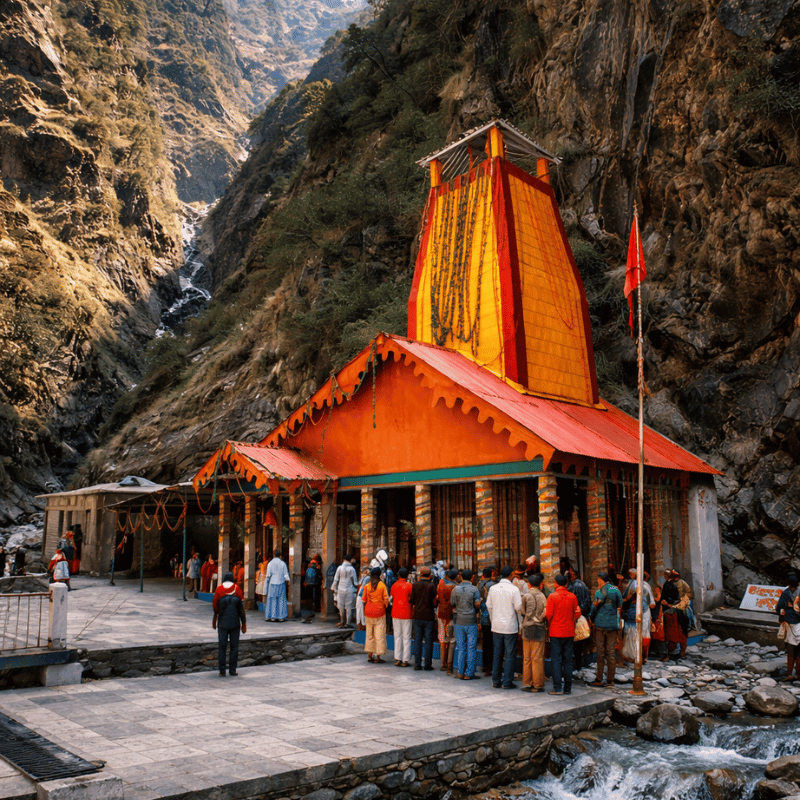
Yamunotri Temple: Maharani Gularia of Jaipur built the temple in the 19th Century. It was destroyed twice in the present century and rebuilt again. At Yamunotri, One can cook rice by packing it in a cloth and dipping it in the hot water of the Tapt Kund. Pilgrims take this cooked rice home as “Prasad”. Here near the temple “Pooja” can be offered to DivyaShila.For More Information visit Yamunotri.
Surya Kund: There are a Number of thermal springs near temple, which flows into numerous pools. The most important of these is Surya Kund.
Yamunotri Weather- In summer the maximum temp. is 18 degrees and the minimum is 10 degrees celsius. The days are pleasantly cool but the nights are cold.
Day 03: Barkot to Uttarkashi (100kms/4 hrs drive)
Morning after breakfast, drive to Uttarkashi. Visit Shiv Gufa on the way to Uttarkashi. Arrival in Uttarkashi visit Kashi Vishwanath Temple in Uttarkashi city, after that check in to the hotel, day free for rest. Overnight stay at Uttarkashi.
Uttarkashi is home to a number of ashrams, temples. The name of the town reflects its similarity too and location (as north of) the city of Kashi (Varanasi). Similar to Varanasi, town of Uttarkashi is also situated on the banks of River Ganga.For More Information visit Uttarkashi.
Vishwanath temple – Vishwanath temple is one of the oldest Shiva temples in Northern India. Re-constructed in 1857 by Maharani Khaneti Devi of Tehri State in the ancient architectural style. It is situated at the heart of the town. A massive iron trident, symbolic of divine mother’s, is erected and worshiped from time immemorial at the temple complex. Ganeshji, SakshiGopal, Markandeya Rishi small shrines are also part of the temple complex. AkhandJyoti as well as AkhandAbhishek, special aarti at morning and evening are offered. As per SkundaPuran, Uttarkashi is known as ‘Saumya Varanasi’, the abode of Lord Shiva in Kaliyug and counted as one of the twelve Jyotirlingas.
Day 04: Uttarkashi to Gangotri to Uttarkashi (100kms / 3-4 hrs each side)
Early morning after breakfast drive to Gangotri, enroute at Gangnani take a holy dip in Garam Kund, further drive to Gangotri via beautiful Harsil Valley. Harsil is famous for its nature beauty and for the majestic views of the Deodar trees, Mountains and Apple garden. On arrival at Shree Gangotri, take a holy dip in the sacred river Ganges which is also called Bhagirathi at its origin. Perform Pooja and Darshan, after that relax for some time in the lovely surroundings. Later drive back to Uttarkashi. Overnight stay at Uttarkashi.
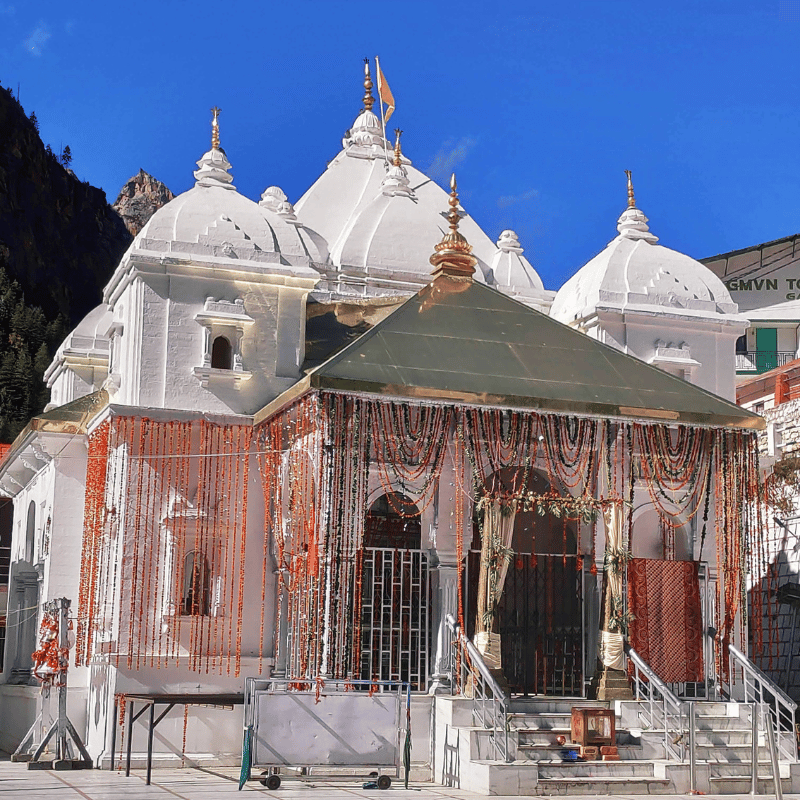
Gangotri Temple: The temple was constructed by the Gorkha General Amar Singh Thapa in the 18th Century, is situated on the right bank of Bhagirathi. For More Information visit Gangotri.
Gangotri Weather – The maximum temperature during summer can go up to 20° Celsius. Summer nights can get cooler with a minimum temperature of 10° Celsius. Light woolen clothes are required while visiting Gangotri during summer. Winter season is very cold in Gangotri. Gangotri will be covered in sheets of snow during winter. Pilgrimage centers remains closed throughout winter due to heavy snow falls.
Day 05: Uttarkashi to Guptkashi (220 kms/8-9 hrs drive one way) Height: 1319 MTS.
Morning after breakfast, drive to Guptkashi via Moolgarh & Lambgaon. Enroute you can see the beautiful river Mandakini at Tilwara. The Mandakini river comes from Kedarnath, drive alongside the river to reach Guptkashi, visit ArdhNarishwar Temple in Guptkashi. Check into the hotel arrival in Guptkashi. Overnight stay at Guptkashi.
Guptakashi:-The name GuptKashi means “Hidden Kashi”. Mythology describes how when the Pandava brothers were searching for a glimpse of Shiva, Shivji first concealed himself at Guptkashi, but later fled from them further up the valley to Kedarnath, where the Pandavas finally got their wish fulfilled. There are more tangible connections as well-the Kedarnath pandas (priests) live in Guptkashi during the winter months, and after the Kedarnath temple closes for the winter, the image of Kedarnath passes through GuptKashi on its way to Ukhimath (across the valley), where it stays for the winter.
Day 06 : Guptkashi - Sonprayag - Gaurikund - Kedarnath
Morning after breakfast driver will drop you at Sonprayag, From Sonprayag you have to take local government vehicle to Gaurikund at your own cost. start your trek from Gaurikund to Kedarnath (by Pony / Doli / Helicopter at your own cost) Visit Kedarnath Temple after Darshan trek down to Gaurikund , Either Stay in Kedarnath.Overnight stay at Kedarnath.
By Trek: Morning our driver will drop you at Sonprayag, From Sonprayag you have to take local government vehicle to Gaurikund at your own cost & then your trek starts for Kedarnath.After darshan, overnight stay in Kedarnath.
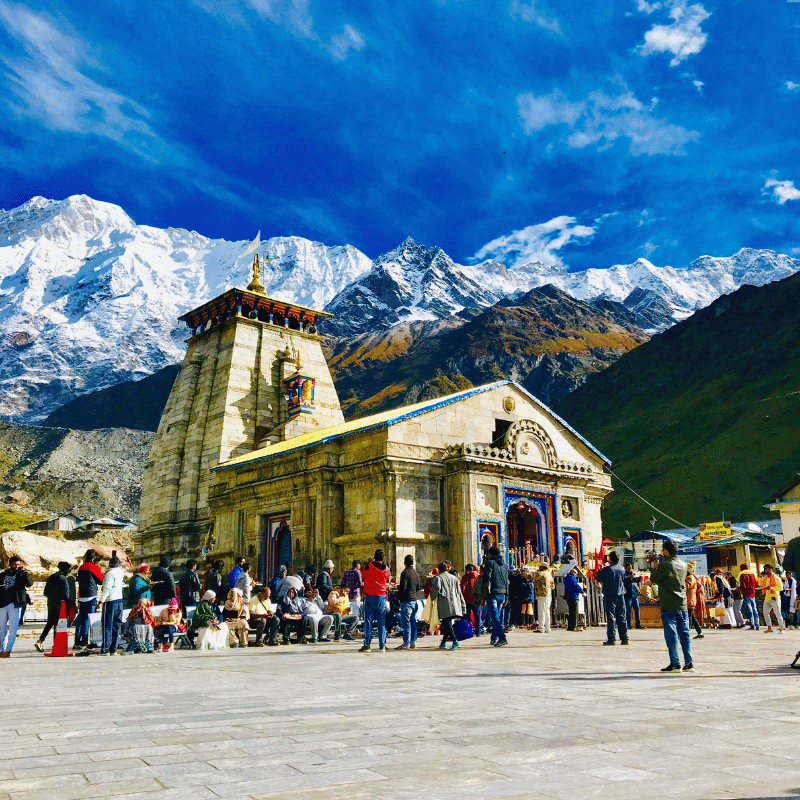
Kedarnath: The Kedarnath shrine, one of the 12 jyotirlingas of Lord Shiva, is a scenic spot situated, against the backdrop of the majestic Kedarnath range. Kedar is another name of Lord Shiva. According to legend, the Pandavas after having won over the Kaurava in the Kurukshetra war, felt guilty of having killed their own brothers and sought the blessings of Lord Shiva for redemption. He eluded them repeatedly and while fleeing took refuge at Kedarnath in the form of a bull. On being followed he dived into the ground, leaving his hump on the surface. The remaining portions of Lord Shiva appeared at four other places and are worshipped there as his manifestations. The arms appeared at Tungnath, the face at Rudranath, the belly at Madmaheshwar and his locks (hair) with head at Kalpeshwar.
Day 07: Kedarnath - Gaurikund - Sonprayag - Guptkashi Return
Additional place to Visit:- Bhairo Baba Temple, Adi Shankaracharya Math Early morning you get up and after taking bath, checkout from Hotel/Camp from kedarnath and Trek back to guptkashi after completing the trek Check in the hotel relax and have your dinner and overnight stay at the hotel in guptkashi.
Day 08 : Guptkashi to Pipalkoti/Badrinath (190 kms/6.5 hrs)
Morning after breakfast, drive to Badrinath. Check in to the hotel arrival in Badrinath. Pilgrims after having a bath in the Tapt Kund have the Darshan of Badrivishal & Aarti in evening. Brahma Kapal is significant for Pinddan Shraddh of ancestors (Pitrus). There are other interesting sightseeing spot like Mana, Vyas Gufa, Mata Murti, Charan Paduka, Bhimkund and the “Mukh” of the Saraswati River. Just within the 3 kms. of Badrinath ji. Overnight stay at Pipalkoti.
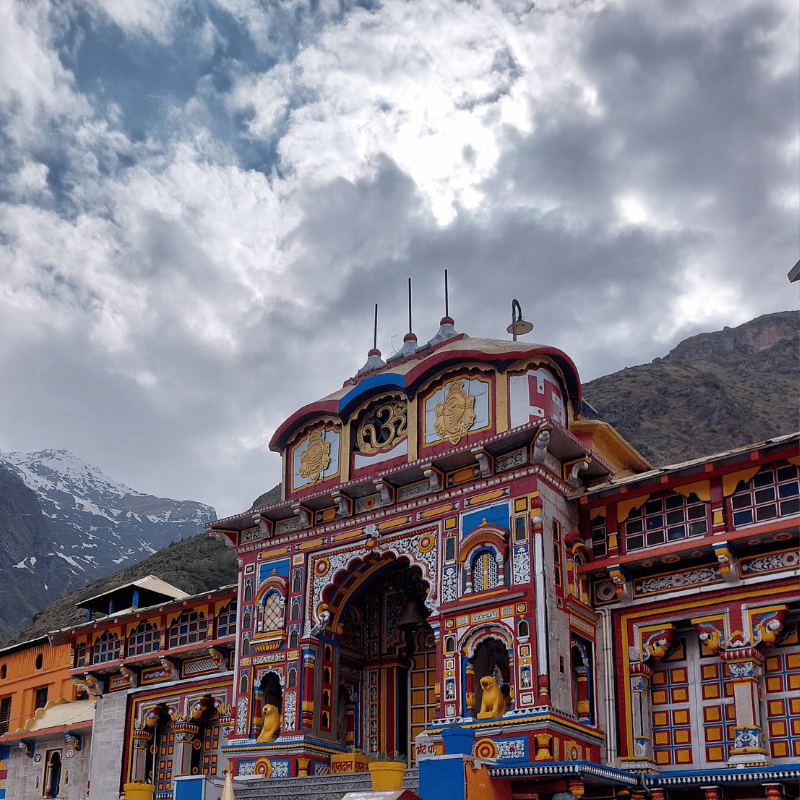
Badrinath ji is one of the ‘Ancient Four Dhams’ and one of the most celebrated pilgrimage spots of the country and is situated at an elevation of 3,133 meters, guarded on either side by the two mountain ranges known as Nar & Narayan with the towering Neelkanth Peak providing a splendid backdrop
Badrinath Weather: The average maximum temperature will be around 18° Celsius and the average minimum is 8° Celsius. Warm and woolen clothes are hence required for a stay in Badrinath throughout the year. Winter in Badrinath is often accompanied by snow falls. Winter is very chilly with an average temperature of 5° Celsius. Due to the extreme climatic conditions, this time is usually closed for tourists
Day 09: Pipalkoti/Badrinath - Rudraprayag/Devprayag
Morning after breakfast, driver for Rudraprayag via Joshimath if routes are open. Visit on the way Narsingh Temple in Joshimath. Enroute visit Mana Village for sightseeing, after visiting Mana Village drive to Rudraprayag. Check into the hotel arrival in Rudraprayag. Overnight stay at Rudraprayag.
Joshimath is situated on the slopes above the confluence of the rivers Alaknanda and Dhauliganga. Of the four ‘Mathas’ established by Adi Shankaracharya, Joshimath is the winter seat of Badrinath. The idol is brought down to Joshimath and installed in the temple for people to worship. There are many other temples in the township. The most important is the temple of NarSingh with the idol of Lord Vishnu. The left arm of this deity is getting destroyed with time and the popular belief holds that the day the arm completely withers Badrinath valley will cease to exist and the Gods will transfer the residence into the neighboring Niti Valley at Bhavishya Badri.
Rudraprayag Weather – Generally hot in summer, the temperature ranges from 35-40 degree Celsius, Winter: The Days are pleasantly cool but the nights are cold, temp ranges from 20 deg to 05 deg
Day 10 : Rudraprayag/Devprayag to Haridwar
Morning after breakfast, check out from the hotel. Depart for Haridwar. Drive to Home for Departure. Your Chardham yatra journey will end in Haridwar/Delhi. Back to home and take rest. We wish you a very happy journey. We hope to see you soon.